This day Beijing tour begins at 08:30am and ends at around 5:00pm. Please get everything ready before our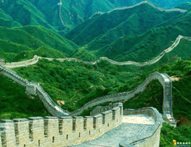 English-speaking guide comes and meets you in the lobby of the hotel where you stay. It’s about one and half hours driving to the first stop of the main attractions, the Great Wall at Badaling section. English-speaking guide comes and meets you in the lobby of the hotel where you stay. It’s about one and half hours driving to the first stop of the main attractions, the Great Wall at Badaling section. Badaling means "giving access to every direction", the name itself suggests its strategic importance. Badaling Great Wall lies in Yanqing County, northwest of Beijing. It covers five counties and one district, namely: Miyun, Huairou, Pinggu, Yanqing and Changping County and Mentougou District. Badaling Great Wall was the best-preserved part of the Ming Great Wall. Here, the wall averages 7.8 meters high, 6.5 metres wide of the base, and 5.8 meters at the top. The wall was designed to allow five horsemen or ten soldiers to march side by side along the wall. The flights of stairs up to the outer wall are 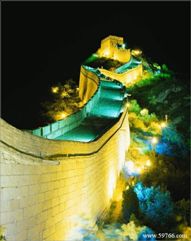 fairely widely spaced. For every few hundred meters, you can see a watchtower. Also, the wall of this section was built of giant rocks and bricks of similar size. It was faced with stone, and the inside was filled with earth and rubber, therefore, Badaling Great Wall was also regarded the strongest section of the Ming Great Wall. Two hours are needed for visiting the Great Wall at Badaling section. fairely widely spaced. For every few hundred meters, you can see a watchtower. Also, the wall of this section was built of giant rocks and bricks of similar size. It was faced with stone, and the inside was filled with earth and rubber, therefore, Badaling Great Wall was also regarded the strongest section of the Ming Great Wall. Two hours are needed for visiting the Great Wall at Badaling section. 12:30pm, it is time for lunch when you finish morning half day tour. We would like to offer Beijing day tour with lunch in a local restaurant, which is included in the given price. We also consider that in this way you can learn a lot more about Chinese cuisines during your stay in China. 2 hours are needed for having lunch and driving to the next stop, the Ming Tombs, and Sacred Road. The Ming Tombs are located 50 kilometers to the nort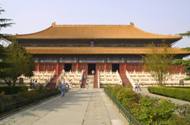 hwest of downtown Beijing. The burial ground of 13 emperors of the Ming Dynasty (1368-1644) is embraced by mountains on three sides and opening to a flat basin on the south. Mangshan and Hushan mountains rise on either side. The Wenyu River flows to the northwest. The whole area of 40 square kilometers is covered with ancient pine and cypress trees. Changling, the oldest mausoleum in the center of the burial complex on Tianshou Mountain, was built in 1409 and Siling, the last mausoleum of the Ming Tombs, was built in 1644, 200 years after the first one. It was the most costly construction project with the longest time in the construction of imperial burial grounds in China. In those days the area with a circumference of several dozen kilometers was tightly guarded, giving it a mysterious atmosphere. hwest of downtown Beijing. The burial ground of 13 emperors of the Ming Dynasty (1368-1644) is embraced by mountains on three sides and opening to a flat basin on the south. Mangshan and Hushan mountains rise on either side. The Wenyu River flows to the northwest. The whole area of 40 square kilometers is covered with ancient pine and cypress trees. Changling, the oldest mausoleum in the center of the burial complex on Tianshou Mountain, was built in 1409 and Siling, the last mausoleum of the Ming Tombs, was built in 1644, 200 years after the first one. It was the most costly construction project with the longest time in the construction of imperial burial grounds in China. In those days the area with a circumference of several dozen kilometers was tightly guarded, giving it a mysterious atmosphere.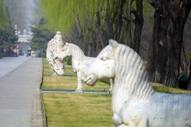 In the front part of the imperial necropolises, there usually is a Sacred Way (or Divine Road), which means the road leading to heaven. The Emperor, known as the Son of the Heaven, who came from Heaven to his country through the Sacred Way, also deservedly would return to Heaven through this road. The road is often lined with stone statues, which are important decorations of the mausoleum. These statues are usually 12 human figures (including the general, civil officials and meritorious officials) and 24 animals, which are lion, camel, elephant, xiezhi (a mythological unicorn), qilin (one of the four "divine animals, the other three are dragon, phoenix and tortoise), and horse. There are 4 of each of these animals: two standing and two squatting with different meanings. Lion symbolizes awesome solemnity because of their ferocity. Camel and elephant are meant to suggest the vastness of the  territory controlled by the court, because they are dependable transport in desert and tropics. Xiezhi was put there to keep evil spirits away, because it was believed to possess the sixth sense to tell right and wrong. If two men fight, a xiezhi would gore the wicked one. Qilin, an auspicious symbol, was placed on two sides. Horse, as the emperor's mount, is absolutely indispensable. It is said that these animals is supposed to change guard at midnight. territory controlled by the court, because they are dependable transport in desert and tropics. Xiezhi was put there to keep evil spirits away, because it was believed to possess the sixth sense to tell right and wrong. If two men fight, a xiezhi would gore the wicked one. Qilin, an auspicious symbol, was placed on two sides. Horse, as the emperor's mount, is absolutely indispensable. It is said that these animals is supposed to change guard at midnight. This day tour ends with the transfer back to your hotel at around 5:00pm. We hope that this day tour arrangement just fits your needs and interests. We look forward to hearing from you. |